
Welcome to the Tracefossils subsite on Invertebrate Paleontology!
Please enter a genera name to retrieve more information.
Arthrophycus
Classification
Phylum:
Trace Fossils and Problematica
Class:
Trace Fossils
Formal Genus Name and Reference:
Arthrophycus HALL, 1852, p. 4
Type Species:
*A. harlani, M (=Fucoides harlani CONRAD, 1838, p. 113)
Images
(Click to enlarge in a new window)
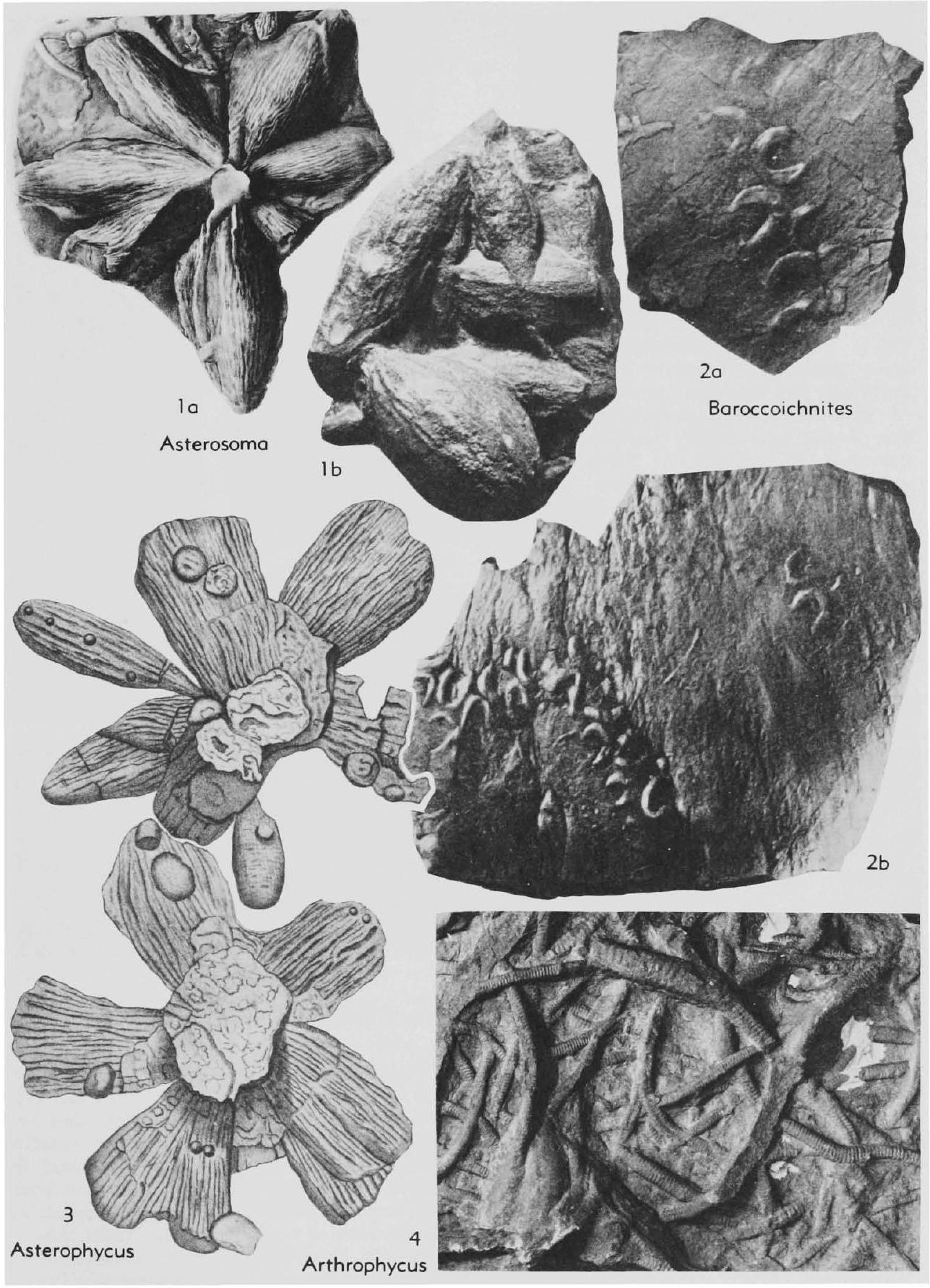
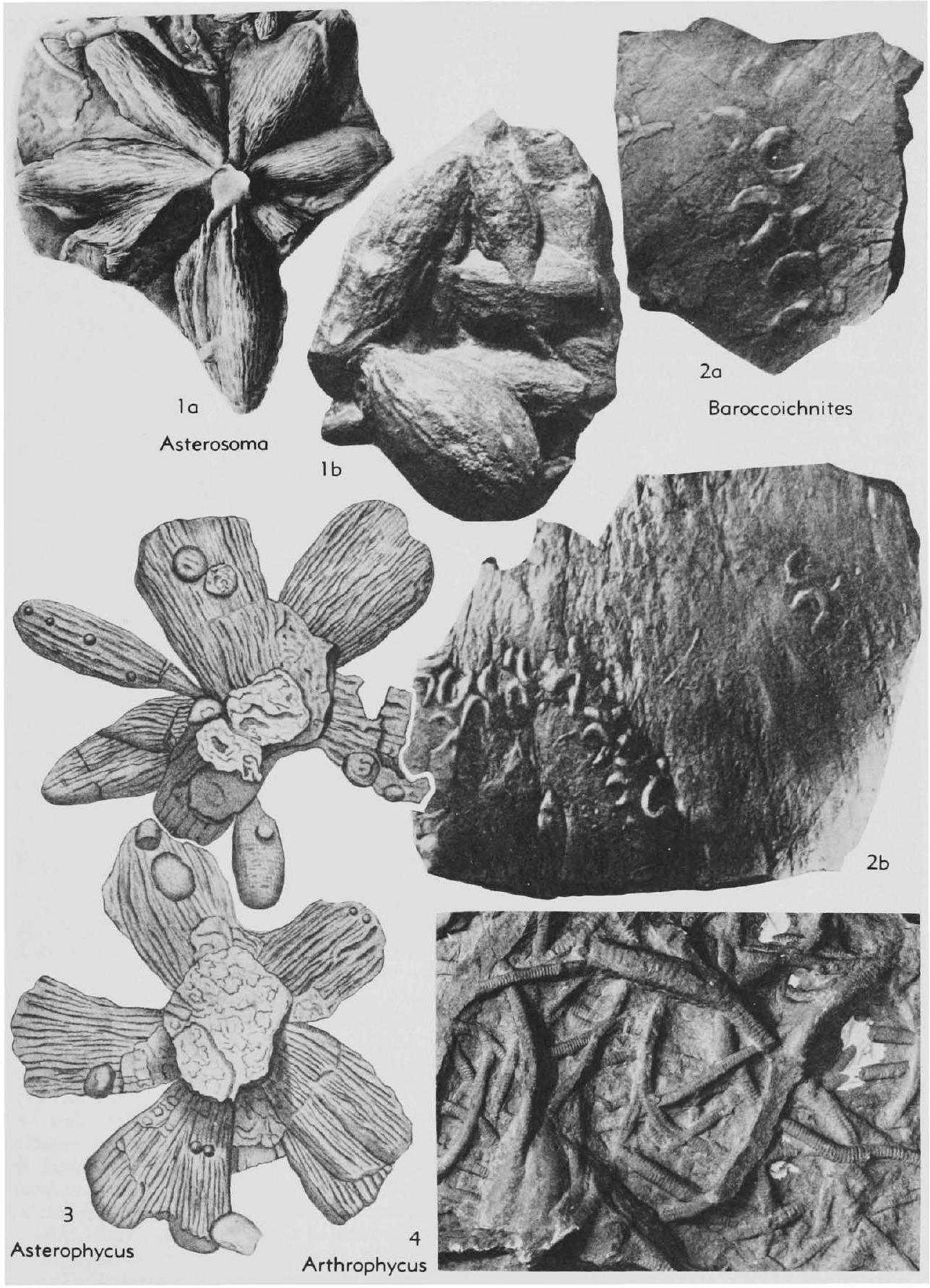 Fig. 25,4. A. alleghaniensis (HARLAN), L.Sil., N.Y., X0.3 (Hantzschel, 1962)
Synonyms
Harlania, Rauffella, Arthrophicus, Phycodes
Geographic Distribution
N.Am.-S.Am.-Eu.-N.Afr.-Asia M.
Age Range
Beginning Stage in Treatise Usage:
Ord.
Beginning International Stage:
Tremadocian
Fraction Up In Beginning Stage:
0
Beginning Date:
486.85
Ending Stage in Treatise Usage:
Sil.
Ending International Stage:
Pridoli
Fraction Up In Ending Stage:
100
Ending Date:
419
Description
Bundles of annulated curved burrows, simple or branched, subquadrate in cross section, mostly 1 to 2 cm in diameter, up to 60 cm long, commonly bilobate with median longitudinal depression, surface showing strong, very regularly spaced transverse ridges, internal chevron-shaped filling. [Feeding burrow; for history of the genus see JAMES (1893); at first regarded as plant (even as late as 1952 by BECKER & DONN), inorganic (tectonic origin advocated by SCHILLER, 1930); trails produced by arthropods or worms; first explanation as lebensspur given by NATHORST (188Ia); according to SARLE (1906a), perhaps made by sedentary polychaetes.] [Arthrophycus sometimes considered junior synonym of Phycodes RICHTER, 1850 (e.g., by SEILACHER, 1955, p. 386); OSGOOD (1970, p. 342) agrees with author in differentiating the two genera; similar burrows from the Lower and Upper Cretaceous of USA (HOWARD, 1966; FREY & HOWARD, 1970) and from European Cretaceous and Upper Tertiary deposits (Pol., Aus.) have been compared with A,·throphycus, but are not typicaL]
References
Museum or Author Information
Classification
Phylum:
Trace Fossils and Problematica
Class:
Trace Fossils
Formal Genus Name and Reference:
Arthrophycus HALL, 1852, p. 4
Type Species:
*A. harlani, M (=Fucoides harlani CONRAD, 1838, p. 113)
Images
(Click to enlarge in a new window)
Fig. 25,4. A. alleghaniensis (HARLAN), L.Sil., N.Y., X0.3 (Hantzschel, 1962)
Synonyms
Harlania, Rauffella, Arthrophicus, Phycodes
Geographic Distribution
N.Am.-S.Am.-Eu.-N.Afr.-Asia M.
Age Range
Beginning Stage in Treatise Usage:
Ord.
Beginning International Stage:
Tremadocian
Fraction Up In Beginning Stage:
0
Beginning Date:
486.85
Ending Stage in Treatise Usage:
Sil.
Ending International Stage:
Pridoli
Fraction Up In Ending Stage:
100
Ending Date:
419
Description
Bundles of annulated curved burrows, simple or branched, subquadrate in cross section, mostly 1 to 2 cm in diameter, up to 60 cm long, commonly bilobate with median longitudinal depression, surface showing strong, very regularly spaced transverse ridges, internal chevron-shaped filling. [Feeding burrow; for history of the genus see JAMES (1893); at first regarded as plant (even as late as 1952 by BECKER & DONN), inorganic (tectonic origin advocated by SCHILLER, 1930); trails produced by arthropods or worms; first explanation as lebensspur given by NATHORST (188Ia); according to SARLE (1906a), perhaps made by sedentary polychaetes.] [Arthrophycus sometimes considered junior synonym of Phycodes RICHTER, 1850 (e.g., by SEILACHER, 1955, p. 386); OSGOOD (1970, p. 342) agrees with author in differentiating the two genera; similar burrows from the Lower and Upper Cretaceous of USA (HOWARD, 1966; FREY & HOWARD, 1970) and from European Cretaceous and Upper Tertiary deposits (Pol., Aus.) have been compared with A,·throphycus, but are not typicaL]