
Welcome to the Tracefossils subsite on Invertebrate Paleontology!
Please enter a genera name to retrieve more information.

Gyrochorte
Classification
Phylum:
Trace Fossils and Problematica
Class:
Trace Fossils
Formal Genus Name and Reference:
Gyrochorte HEER, 1865, p. 142
Type Species:
*G. comosa, SD HÄNTZSCHEL, 1962, p. W196
Images
(Click to enlarge in a new window)
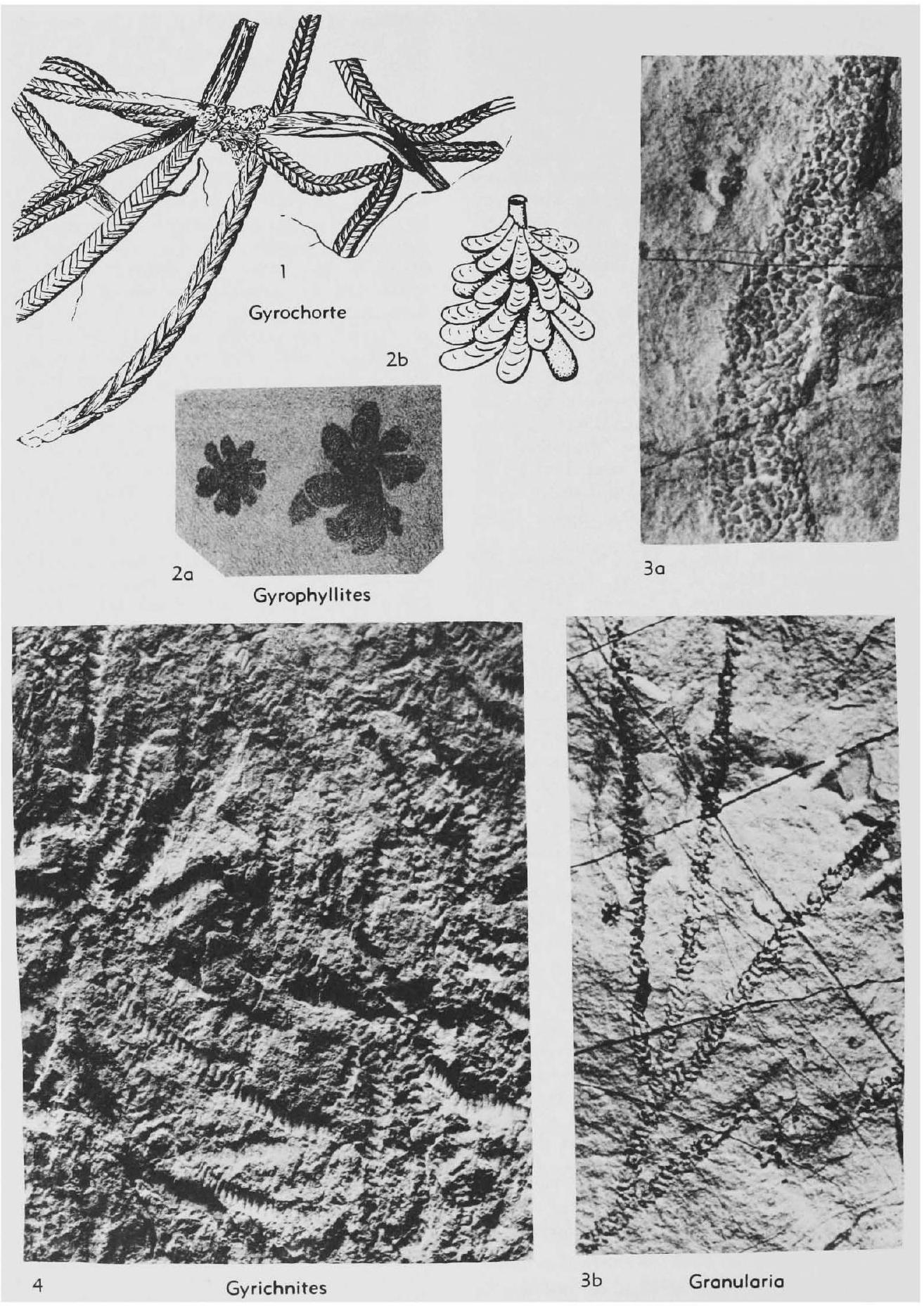
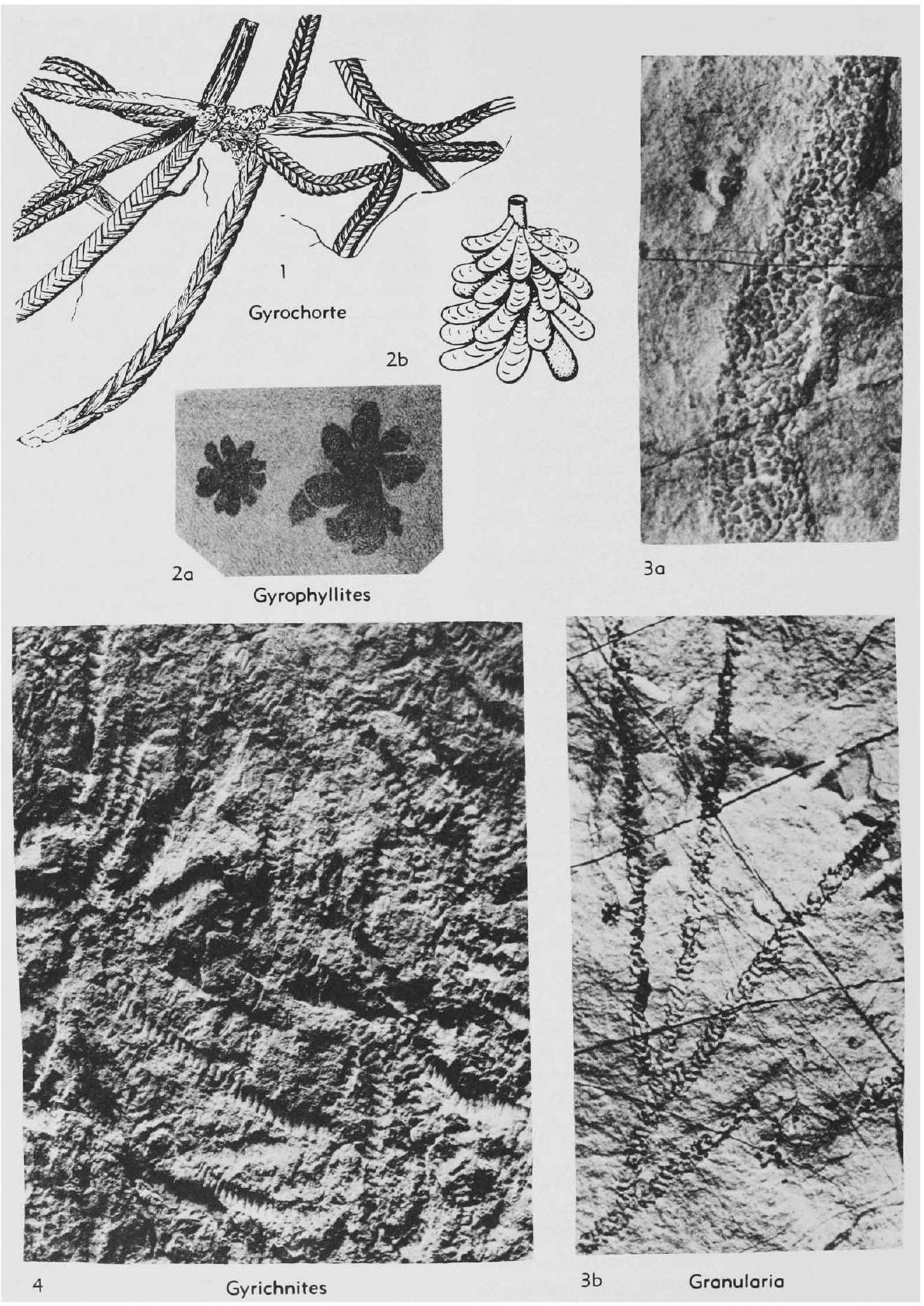 Fig. 40,1. *G. comosa, M.Jur., Switz., ×1 (Heer, 1865)
Synonyms
Gyrochorda, ?Equihenia
Geographic Distribution
Sil., USA(Ga.), ?Carb., Jur.-Tert., Eu.Greenl., ?Carb., ?/ur.-Tert., USA-S.Am.-Antarct.
Age Range
Beginning Stage in Treatise Usage:
Sil., ?Carb., Jur.
Beginning International Stage:
Rhuddanian
Fraction Up In Beginning Stage:
0
Beginning Date:
443.07
Ending Stage in Treatise Usage:
Tert.
Ending International Stage:
Gelasian
Fraction Up In Ending Stage:
100
Ending Date:
1.81
Description
Trace up to 5 (rarely 10) mm wide, in epirelief preserved as plaited ridges with biserially arranged, obliquely aligned pads of sediment ("Zopf-fährten" of German literature); in hyporelief preserved as smooth biserial grooves separated by median ridge; course strongly winding and direction changing sharply; trace may intersect itself or other traces; ridges and their grooves may be separated by vertical distance of 1 cm; usually preserved in clastic sediments. [Crawling trails, similar to amphipod trails (e.g., Corophium); doubtless made by tunnelling through sediment; producer unknown, ?worms or crustaceans; for model of this trail see SEILACHER (1955, p. 380, fig. 2b); for detailed discussion of mechanism of formation of this trail see HALLAM (1970, p. 192-195) - HALLAM's proposed mode of origin for Gyrochorte as a collapsed tunnel has been recenty rejected by HEINBERG (1973), who described vertical spreite·1ike structures connecting the epichnial ridges with the hypichnial grooves and fdt that Gyrochorte was produced by a polychaete-like worm moving obliquely through the sediment..] [G. bisulcata GEINITZ, 1883-95 (Eoc., N.Ger.) does not belong to Gyrochorte, s.s., but is similar to Dreginozoum VAN DER MARCK; "Gyrochorte" carbonaria SEILACHER, 1954 (U.Carb., Ger.) is no true Gyrochorte; for discussion see SEILACHER (1963, p. 83). MARTINSSON (1965, p. 219) has described the relationship of Gyrochorte to Halopoa TORELL.]
References
Museum or Author Information
Classification
Phylum:
Trace Fossils and Problematica
Class:
Trace Fossils
Formal Genus Name and Reference:
Gyrochorte HEER, 1865, p. 142
Type Species:
*G. comosa, SD HÄNTZSCHEL, 1962, p. W196
Images
(Click to enlarge in a new window)
Fig. 40,1. *G. comosa, M.Jur., Switz., ×1 (Heer, 1865)
Synonyms
Gyrochorda, ?Equihenia
Geographic Distribution
Sil., USA(Ga.), ?Carb., Jur.-Tert., Eu.Greenl., ?Carb., ?/ur.-Tert., USA-S.Am.-Antarct.
Age Range
Beginning Stage in Treatise Usage:
Sil., ?Carb., Jur.
Beginning International Stage:
Rhuddanian
Fraction Up In Beginning Stage:
0
Beginning Date:
443.07
Ending Stage in Treatise Usage:
Tert.
Ending International Stage:
Gelasian
Fraction Up In Ending Stage:
100
Ending Date:
1.81
Description
Trace up to 5 (rarely 10) mm wide, in epirelief preserved as plaited ridges with biserially arranged, obliquely aligned pads of sediment ("Zopf-fährten" of German literature); in hyporelief preserved as smooth biserial grooves separated by median ridge; course strongly winding and direction changing sharply; trace may intersect itself or other traces; ridges and their grooves may be separated by vertical distance of 1 cm; usually preserved in clastic sediments. [Crawling trails, similar to amphipod trails (e.g., Corophium); doubtless made by tunnelling through sediment; producer unknown, ?worms or crustaceans; for model of this trail see SEILACHER (1955, p. 380, fig. 2b); for detailed discussion of mechanism of formation of this trail see HALLAM (1970, p. 192-195) - HALLAM's proposed mode of origin for Gyrochorte as a collapsed tunnel has been recenty rejected by HEINBERG (1973), who described vertical spreite·1ike structures connecting the epichnial ridges with the hypichnial grooves and fdt that Gyrochorte was produced by a polychaete-like worm moving obliquely through the sediment..] [G. bisulcata GEINITZ, 1883-95 (Eoc., N.Ger.) does not belong to Gyrochorte, s.s., but is similar to Dreginozoum VAN DER MARCK; "Gyrochorte" carbonaria SEILACHER, 1954 (U.Carb., Ger.) is no true Gyrochorte; for discussion see SEILACHER (1963, p. 83). MARTINSSON (1965, p. 219) has described the relationship of Gyrochorte to Halopoa TORELL.]