
Welcome to the Tracefossils subsite on Invertebrate Paleontology!
Please enter a genera name to retrieve more information.
Monocraterion
Classification
Phylum:
Trace Fossils and Problematica
Class:
Trace Fossils
Formal Genus Name and Reference:
Monocraterion TORELL, 1870, p. 13
Type Species:
M. tentaculatum; M
Images
(Click to enlarge in a new window)
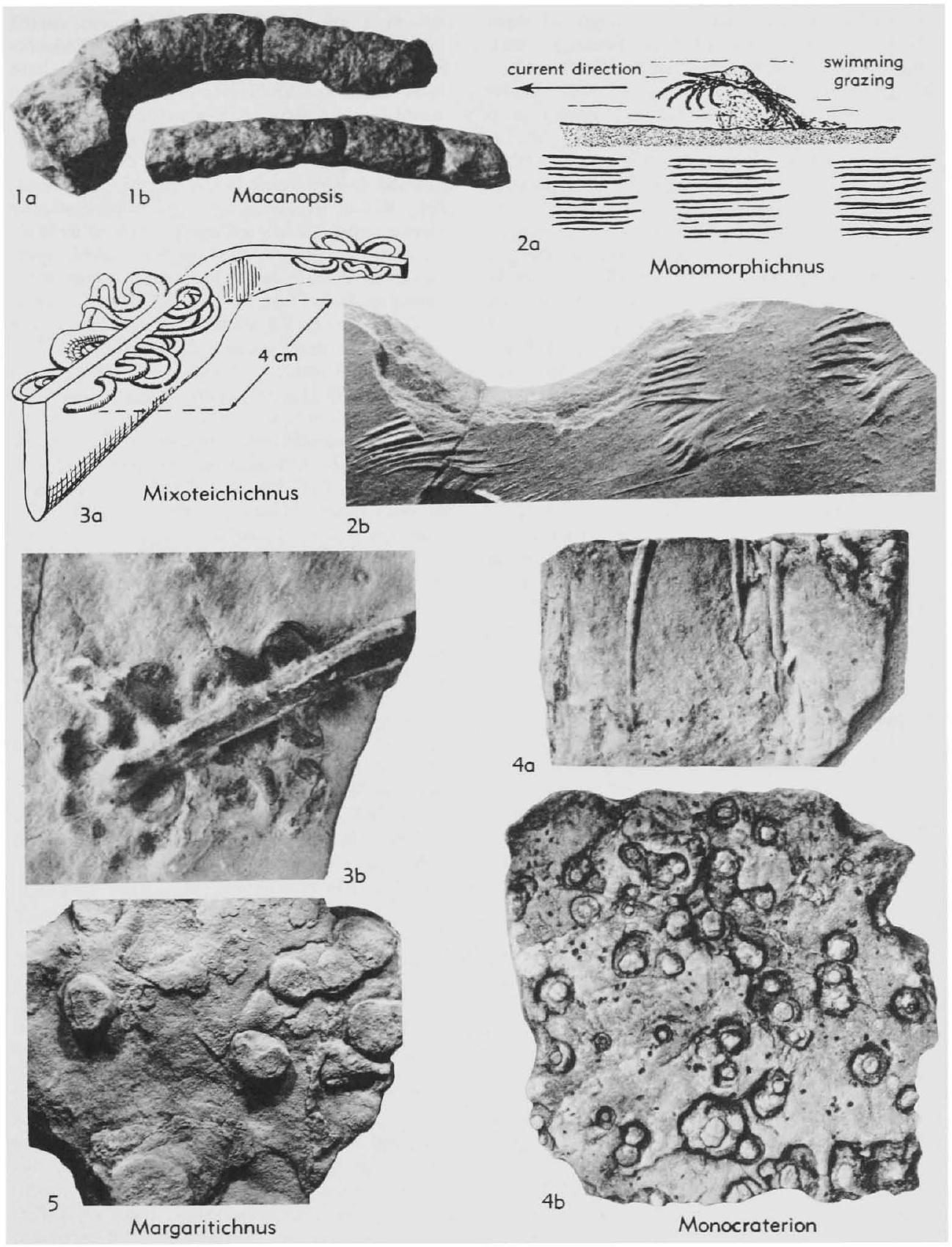 Fig. 51,4.*M. tentaculatum, L.Cam.(Lingulid ss.), Swed. (W.Gotl.), 4a,b, X0.5 (Westergård, 1931)
Synonyms
Lepocraterion, Monocraterium
Geographic Distribution
Cam. (Pleist. drift), Eu.(N.Ger.), Cam., Ord., Eu.(Swed.-Nor.-Eng.)-N.Am.-Asia (Jordan), ?U.Dev., Eu.(Eng.), Carb., Eu.(Scot.), ?L.Trias., Eu.(Pol.), L.Jur., Greenl.
Age Range
Beginning Stage in Treatise Usage:
Cam, Ord.
Beginning International Stage:
Fortunian
Fraction Up In Beginning Stage:
0
Beginning Date:
538.8
Ending Stage in Treatise Usage:
L.Jur.
Ending International Stage:
Toarcian
Fraction Up In Ending Stage:
100
Ending Date:
174.7
Description
Trumpet pipes, funnel structure penetrated by central straight or slightly curved plugged tube, perpendicular to bedding plane, never branched, diameter commonly 5 mm., up to 8 cm. (max., 16) long; funnel simple or multiple (latter discernible in transverse section as a series of concentric rings), diameter of funnels usually 1 to 4 cm., greatest depth about 2 cm.; tubes commonly abundant but never crowded like Skolithos, funnel constructed by upward migration of animal inhabiting tube reflected by downward warping of surrounding bedding planes toward central tube. [Dwelling burrow; probably belonging to gregarious, suspension-feeding wormlike organisms.] [ Lepoeraterion STEHMEN differs from Monoeraterion only by the occurrence of a carbonaceous wall which is not considered to be sufficient taxonomic reason to establish a "genus." BOUCEK (1938, p. 249) and HANTZSCHEL (1962, p. W218), with reservation, regarded Monoeraterion as synonym of the commonly annulated tubes "Tigillites"; HALLAM & SWETT (1966, p. 103) properly retained Monoeraterion as a valid name for vertical funnel-shaped burrows; for discussion of relationship to Skolithos, Histioderma, and Mierapium, see WESTERGARD (1931, p. 12); also considered valid genus by FREY & CHOWNS (1972).]
References
Museum or Author Information
Classification
Phylum:
Trace Fossils and Problematica
Class:
Trace Fossils
Formal Genus Name and Reference:
Monocraterion TORELL, 1870, p. 13
Type Species:
M. tentaculatum; M
Images
(Click to enlarge in a new window)
Fig. 51,4.*M. tentaculatum, L.Cam.(Lingulid ss.), Swed. (W.Gotl.), 4a,b, X0.5 (Westergård, 1931)
Synonyms
Lepocraterion, Monocraterium
Geographic Distribution
Cam. (Pleist. drift), Eu.(N.Ger.), Cam., Ord., Eu.(Swed.-Nor.-Eng.)-N.Am.-Asia (Jordan), ?U.Dev., Eu.(Eng.), Carb., Eu.(Scot.), ?L.Trias., Eu.(Pol.), L.Jur., Greenl.
Age Range
Beginning Stage in Treatise Usage:
Cam, Ord.
Beginning International Stage:
Fortunian
Fraction Up In Beginning Stage:
0
Beginning Date:
538.8
Ending Stage in Treatise Usage:
L.Jur.
Ending International Stage:
Toarcian
Fraction Up In Ending Stage:
100
Ending Date:
174.7
Description
Trumpet pipes, funnel structure penetrated by central straight or slightly curved plugged tube, perpendicular to bedding plane, never branched, diameter commonly 5 mm., up to 8 cm. (max., 16) long; funnel simple or multiple (latter discernible in transverse section as a series of concentric rings), diameter of funnels usually 1 to 4 cm., greatest depth about 2 cm.; tubes commonly abundant but never crowded like Skolithos, funnel constructed by upward migration of animal inhabiting tube reflected by downward warping of surrounding bedding planes toward central tube. [Dwelling burrow; probably belonging to gregarious, suspension-feeding wormlike organisms.] [ Lepoeraterion STEHMEN differs from Monoeraterion only by the occurrence of a carbonaceous wall which is not considered to be sufficient taxonomic reason to establish a "genus." BOUCEK (1938, p. 249) and HANTZSCHEL (1962, p. W218), with reservation, regarded Monoeraterion as synonym of the commonly annulated tubes "Tigillites"; HALLAM & SWETT (1966, p. 103) properly retained Monoeraterion as a valid name for vertical funnel-shaped burrows; for discussion of relationship to Skolithos, Histioderma, and Mierapium, see WESTERGARD (1931, p. 12); also considered valid genus by FREY & CHOWNS (1972).]