
Welcome to the Tracefossils subsite on Invertebrate Paleontology!
Please enter a genera name to retrieve more information.
Oldhamia
Classification
Phylum:
Trace Fossils and Problematica
Class:
Trace Fossils
Formal Genus Name and Reference:
Oldhamia FORBES, 1849, p. 20
Type Species:
*O. antiqua KINAHAN, 1858, p. 69, SD Häntzschel, herein (pub!. without formal species names; first description of species by KINAHAN, 1858, p. 69)
Images
(Click to enlarge in a new window)
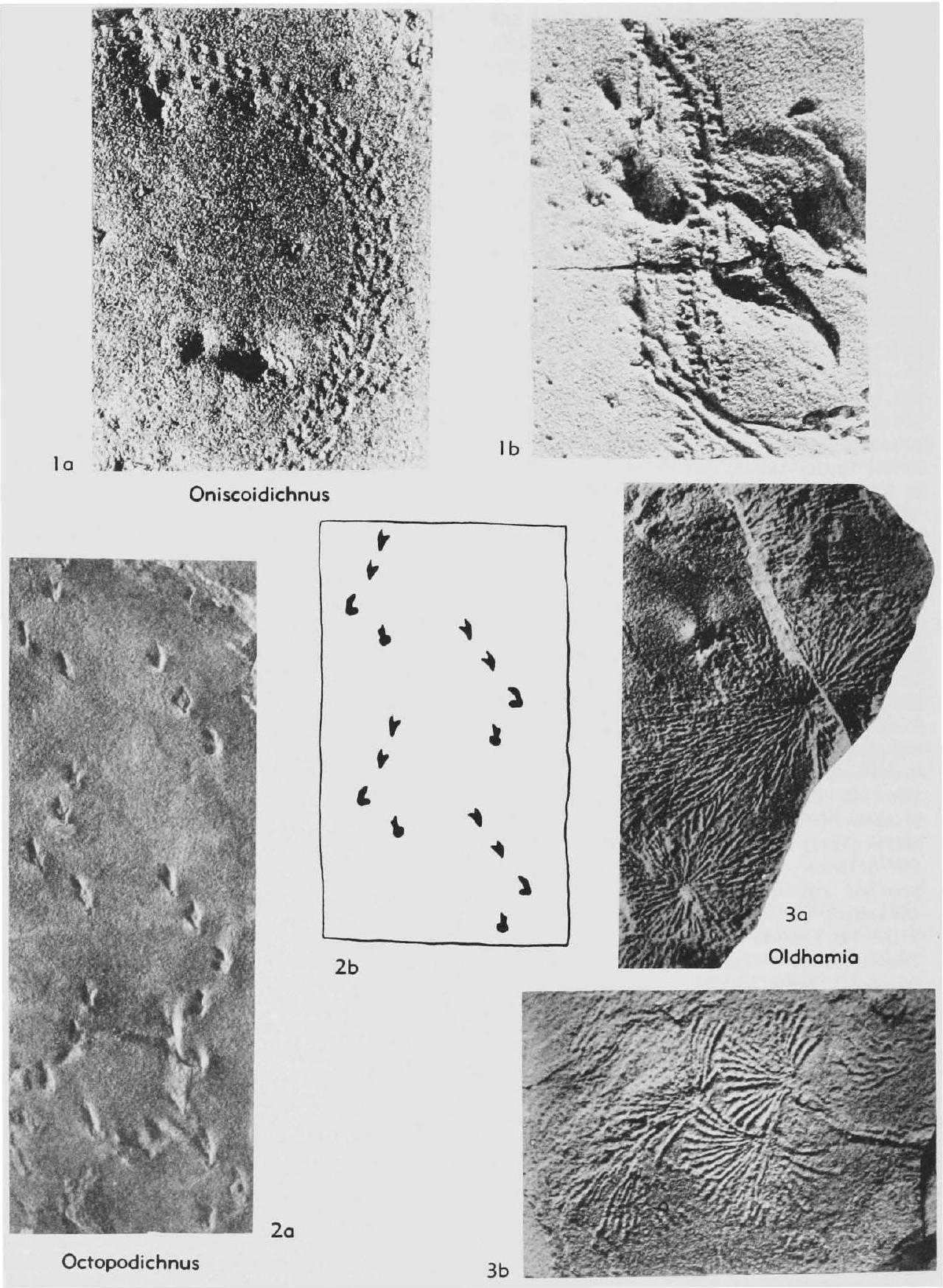 Fig. 53,3a. O. radiata Forbes, Cam., Ire., ×1.3 (Sollas, 1900). -- Fig. 53,3b. *O. antiqua, Cam., Ire., ×1.3 (Sollas, 1900)
Synonyms
Murchisonites
Geographic Distribution
Eu.-N.Am.
Age Range
Beginning Stage in Treatise Usage:
L.Cam, M.Cam
Beginning International Stage:
Fortunian
Fraction Up In Beginning Stage:
0
Beginning Date:
538.8
Ending Stage in Treatise Usage:
L.Cam, M.Cam
Ending International Stage:
Cambrian Stage 4
Fraction Up In Ending Stage:
40
Ending Date:
512.3
Description
Bunches of fine rills, radiating from joints of sympodial axis; representing a grazing pattern. [Numerous explanations of origin: as remains of algae, hydrozoans, bryozoans or of inorganic origin; first(l) interpretation as trace fossil by RUEDEMANN (1942) (radiating feeding trails supposedly made by worms); prevalent in Lower Cambrian turbidite successions. Sometimes regarded as index fossil of Lower Cambrian.] [The Ordovician " 0." pedemontana of Mendoza (RUSCONI, 1956) shown by FRITZ (1965) to be bryozoan (Hallopora sp.); " 0." keithi RUEDEMANN (1942) (Ord., Gaspe) according to CHURKIN & BRABB (1965, p. DI23), different in appearance and thus probably not belonging to Oldhamia.]
References
Museum or Author Information
Classification
Phylum:
Trace Fossils and Problematica
Class:
Trace Fossils
Formal Genus Name and Reference:
Oldhamia FORBES, 1849, p. 20
Type Species:
*O. antiqua KINAHAN, 1858, p. 69, SD Häntzschel, herein (pub!. without formal species names; first description of species by KINAHAN, 1858, p. 69)
Images
(Click to enlarge in a new window)
Fig. 53,3a. O. radiata Forbes, Cam., Ire., ×1.3 (Sollas, 1900). -- Fig. 53,3b. *O. antiqua, Cam., Ire., ×1.3 (Sollas, 1900)
Synonyms
Murchisonites
Geographic Distribution
Eu.-N.Am.
Age Range
Beginning Stage in Treatise Usage:
L.Cam, M.Cam
Beginning International Stage:
Fortunian
Fraction Up In Beginning Stage:
0
Beginning Date:
538.8
Ending Stage in Treatise Usage:
L.Cam, M.Cam
Ending International Stage:
Cambrian Stage 4
Fraction Up In Ending Stage:
40
Ending Date:
512.3
Description
Bunches of fine rills, radiating from joints of sympodial axis; representing a grazing pattern. [Numerous explanations of origin: as remains of algae, hydrozoans, bryozoans or of inorganic origin; first(l) interpretation as trace fossil by RUEDEMANN (1942) (radiating feeding trails supposedly made by worms); prevalent in Lower Cambrian turbidite successions. Sometimes regarded as index fossil of Lower Cambrian.] [The Ordovician " 0." pedemontana of Mendoza (RUSCONI, 1956) shown by FRITZ (1965) to be bryozoan (Hallopora sp.); " 0." keithi RUEDEMANN (1942) (Ord., Gaspe) according to CHURKIN & BRABB (1965, p. DI23), different in appearance and thus probably not belonging to Oldhamia.]