
Welcome to the Tracefossils subsite on Invertebrate Paleontology!
Please enter a genera name to retrieve more information.

Psammichnites
Classification
Phylum:
Trace Fossils and Problematica
Class:
Trace Fossils
Formal Genus Name and Reference:
Psammichnites TORELL, 1870, p. 9
Type Species:
*Arenieolites gigas TORELL, 1868, p. 34; SD FISCHER & PAULUS, 1969, p. 91
Images
(Click to enlarge in a new window)
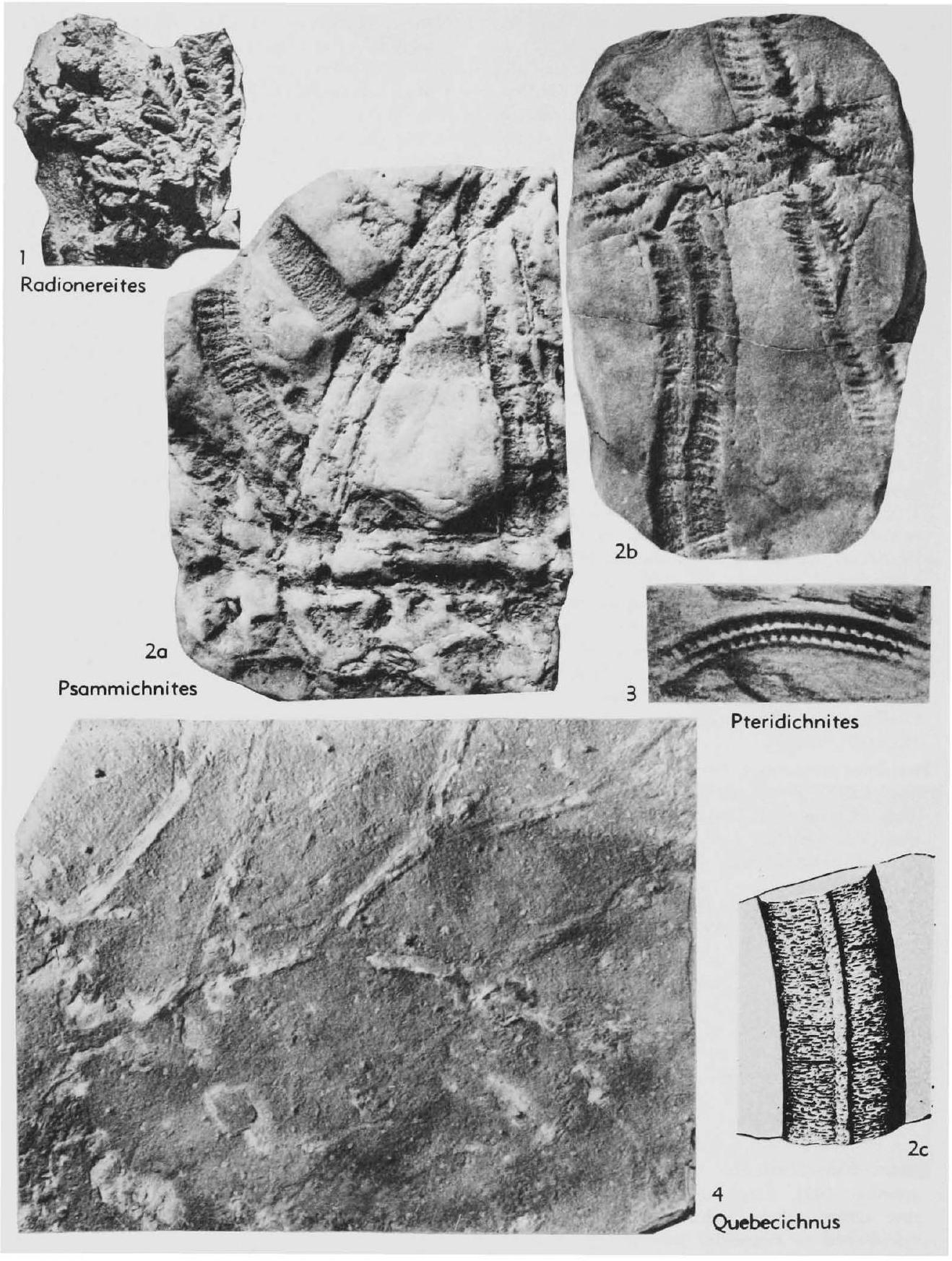 Fig. 62,2a,b. P. sp., L.Cam.; 2a, Swed., X0.25; 2b, loc. unknown, X0.7 (Hantzschel, 1964b). -- Fig. 62,2c. *P. gigas (TORELL), L.Cam., S.Swed.; X0.7 (Torell,1868)
Synonyms
Cymaderma
Geographic Distribution
L.Cam., Eu.(Ire.-S.Swed.)-Can.; L.Cam.(Pleist. drift), Eu.(Ger.-Denm.); ?M.Dev., Eu.(Ger.); ?Penn., USA(Okla.)
Age Range
Beginning Stage in Treatise Usage:
L.Cam.
Beginning International Stage:
Cambrian Stage 3
Fraction Up In Beginning Stage:
0
Beginning Date:
521
Ending Stage in Treatise Usage:
L.Cam., ?M.Dev., ?Penn.
Ending International Stage:
Givetian
Fraction Up In Ending Stage:
100
Ending Date:
378.9
Description
Large ribbonlike trails with narrow longitudinal median ridge; convex upper surface; mostly very flexuous, about 2 to 5 em. wide; with very fine transverse ridges closely spaced. [Usually interpreted as trails made by burrowing gastropods; according to GLAESSNER (1969, p. 389) by mollusks without shells; belonging to the " group" Seolicia DE QUATREFAGES, 1849; interpreted by HOGBOM (1926) as sandy excrements of worms or content of their intestines; regarded by HADDING (1929, p. 58) as worm trails.]
References
Museum or Author Information
Classification
Phylum:
Trace Fossils and Problematica
Class:
Trace Fossils
Formal Genus Name and Reference:
Psammichnites TORELL, 1870, p. 9
Type Species:
*Arenieolites gigas TORELL, 1868, p. 34; SD FISCHER & PAULUS, 1969, p. 91
Images
(Click to enlarge in a new window)
Fig. 62,2a,b. P. sp., L.Cam.; 2a, Swed., X0.25; 2b, loc. unknown, X0.7 (Hantzschel, 1964b). -- Fig. 62,2c. *P. gigas (TORELL), L.Cam., S.Swed.; X0.7 (Torell,1868)
Synonyms
Cymaderma
Geographic Distribution
L.Cam., Eu.(Ire.-S.Swed.)-Can.; L.Cam.(Pleist. drift), Eu.(Ger.-Denm.); ?M.Dev., Eu.(Ger.); ?Penn., USA(Okla.)
Age Range
Beginning Stage in Treatise Usage:
L.Cam.
Beginning International Stage:
Cambrian Stage 3
Fraction Up In Beginning Stage:
0
Beginning Date:
521
Ending Stage in Treatise Usage:
L.Cam., ?M.Dev., ?Penn.
Ending International Stage:
Givetian
Fraction Up In Ending Stage:
100
Ending Date:
378.9
Description
Large ribbonlike trails with narrow longitudinal median ridge; convex upper surface; mostly very flexuous, about 2 to 5 em. wide; with very fine transverse ridges closely spaced. [Usually interpreted as trails made by burrowing gastropods; according to GLAESSNER (1969, p. 389) by mollusks without shells; belonging to the " group" Seolicia DE QUATREFAGES, 1849; interpreted by HOGBOM (1926) as sandy excrements of worms or content of their intestines; regarded by HADDING (1929, p. 58) as worm trails.]